




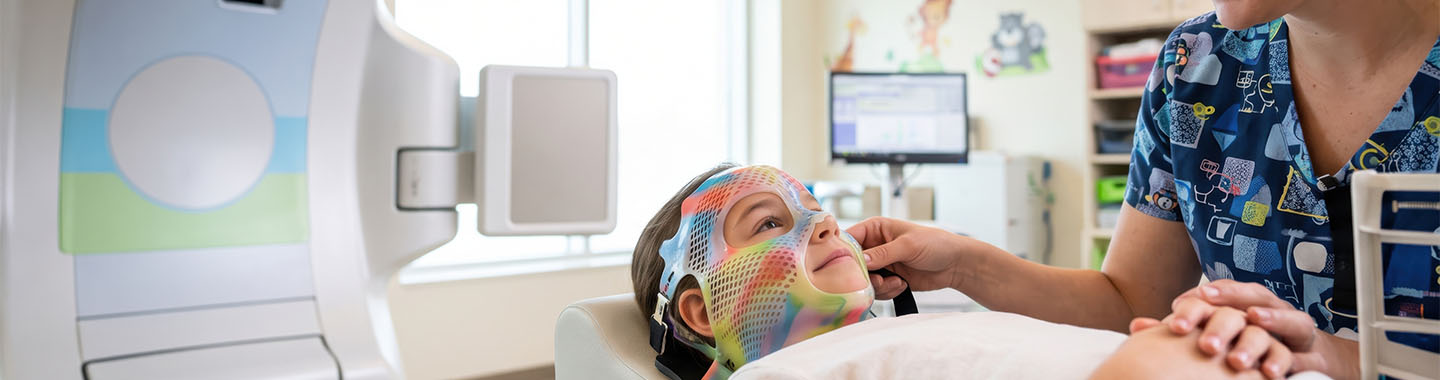
Proton therapy is an advanced form of external beam radiation therapy that uses high-energy protons to treat cancer and certain non-cancerous tumours. Unlike conventional photon radiation, proton beams release most of their treatment dose at a planned depth and then stop, helping reduce radiation exposure beyond the target.
This precise dose distribution can be particularly useful when a tumour is close to sensitive structures such as the brain, spinal cord, eyes, heart or lungs. It may also help limit radiation exposure to healthy, developing tissues in children.
Proton therapy may be used alone or combined with surgery, chemotherapy, immunotherapy or other treatments. It is not automatically better for every cancer, and its suitability depends on the tumour’s type, location and extent, previous treatments and the patient’s overall health.
- Brain and spinal cord tumours
- Tumours of the skull base, including chordomas and chondrosarcomas
- Selected head and neck cancers located close to the eyes, brain, salivary glands or other critical structures
- Selected sarcomas and other tumours involving the spine, pelvis or tissues close to vital organs
- Selected lung, liver, prostate and gastrointestinal cancers
- Tumours located close to the heart, lungs, kidneys, bowel or reproductive organs
- Tumours requiring a high radiation dose while limiting exposure to surrounding tissue
- Recurrent cancers in an area that has previously received radiation, where another course of radiation is considered safe and appropriate

How Proton Therapy Is Performed
Before Treatment
The radiation oncologist reviews the diagnosis, biopsy findings, scans, previous treatments and overall health.
A planning or simulation CT scan is performed with the patient in the treatment position.
MRI, PET-CT or other imaging may be combined with the planning scan to define the tumour and nearby organs more clearly.
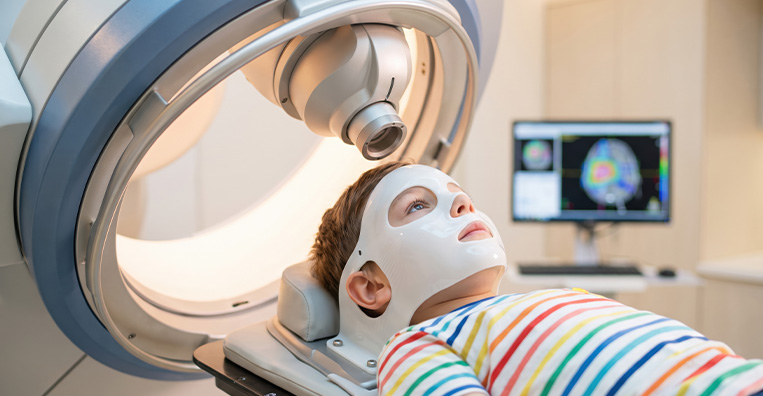
A customised mask, mould or other immobilisation device may be prepared to help the patient remain in the same position during every session.
Small positioning marks may be placed on the skin or immobilisation device.
The radiation oncologist, medical physicist and dosimetry team develop an individualised plan defining the treatment area, proton dose and number of sessions.
Additional procedures, such as placing markers near the tumour or managing breathing-related movement, may be required for selected cancers.

During Treatment
The patient is positioned on the treatment table using the customised immobilisation device.
Imaging is performed to confirm the position of the tumour and surrounding anatomy before the proton beam is delivered.
The treatment machine directs proton beams towards the tumour from carefully planned angles.
The machine may rotate around the patient, but it does not touch them.
The patient must remain still but can communicate with the treatment team throughout the session.
Proton therapy is painless, and the patient cannot see or feel the proton beam.
Most sessions take approximately 15 to 45 minutes, although the actual radiation delivery usually takes only a few minutes.
Treatment is commonly delivered five days a week over several weeks. Some patients may receive fewer sessions depending on the cancer, dose and treatment plan.
Young children and patients unable to remain still may require sedation or anaesthesia.

After Treatment
Most patients can return home shortly after each session.
Normal activities can often be continued, depending on the treatment area and the patient’s general condition.
The patient is not radioactive and does not need to avoid contact with family members after treatment.
Side effects may develop gradually as treatment progresses and can continue for a short period after the final session.
The treatment team monitors symptoms throughout the course and may recommend medicines, dietary support, skin care or rehabilitation.
Follow-up appointments and imaging are planned to assess recovery and treatment response.
Tumours may respond gradually, so the full effect of treatment may not be visible immediately.

Potential Benefits of Proton Therapy
- Precise delivery of radiation to the planned treatment area
- Reduced radiation exposure to healthy tissue beyond the tumour
- Better protection of nearby critical organs
- Ability to deliver an effective dose to tumours located close to sensitive structures
- Reduced risk of certain treatment-related side effects in selected patients
- Particular value in children, whose developing tissues may be more sensitive to radiation
- Potential to reduce radiation exposure during treatment of selected tumours near the heart, lungs, brain, spinal cord or reproductive organs
- An additional treatment option for selected patients who have previously received radiation
- The possibility of maintaining daily activities during treatment, depending on the cancer and treatment area
Side Effects of Proton Therapy
- Tiredness or fatigue
- Redness, dryness, itching, tenderness or darkening of the skin over the treated area
- Temporary hair loss limited to the area receiving radiation
- Reduced appetite
- Nausea or digestive discomfort when the abdomen or pelvis is treated
- Mouth soreness, dry mouth, taste changes or difficulty swallowing during treatment to the head and neck
- Headache, nausea or swelling-related symptoms during treatment to the brain
- Cough, breathlessness or discomfort when the chest is treated
- Changes in bowel or bladder habits during treatment to the abdomen or pelvis
- Temporary changes in blood cell counts when larger areas containing bone marrow are treated
- Delayed effects involving the tissues or organs near the treated area, which will be discussed according to the individual treatment plan
- A small long-term risk of developing another cancer related to radiation exposure