
icon
icon
Overview

Colorectal cancer develops in the colon or rectum and often begins as a non-cancerous growth called a polyp. According to GLOBOCAN 2022 estimates, India recorded approximately 70,000 new colorectal cancer cases and 41,000 deaths from the disease.

Colorectal cancer may not cause noticeable symptoms in its early stages. Screening can detect the disease before symptoms develop and can also identify polyps that may be removed before they become cancerous. Apollo Cancer Centres’ #ColFit screening program uses risk assessment, stool-based testing and colonoscopy, when required, to support early detection and appropriate follow-up.

Book Appointment

Why Screening Is Important

#ColFit offers a simple, risk-based approach to colorectal cancer screening. It begins with a fecal immunochemical test (FIT), which checks a small stool sample for hidden blood. If the result is positive, a colonoscopy is recommended, during which polyps may be removed or a biopsy taken if a suspicious growth is found.

  • Detects cancer earlier: Screening may identify colorectal cancer before symptoms develop, when treatment is generally more effective.

  • Helps prevent cancer: During a colonoscopy, certain polyps can be removed before they progress to cancer.

  • Offers a convenient first-line test: The fecal immunochemical test (FIT) is a non-invasive stool test that can be completed using a small sample.

  • Identifies hidden blood: FIT can detect small amounts of blood in the stool that may not be visible.

  • Supports risk-based care: The appropriate screening test and frequency can be selected according to the individual’s age, medical history and risk factors.

No screening test detects every colorectal cancer. New or persistent bowel symptoms should always be medically evaluated, even after a recent normal screening result.
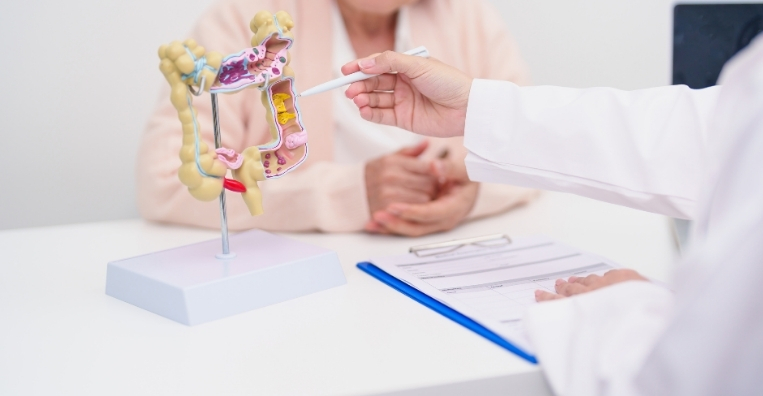
Why Screening Is Important
How It Works

How It Works

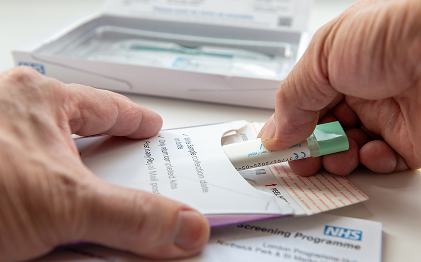
The fecal immunochemical test detects hidden human blood in a stool sample. It requires only a small sample and does not usually involve dietary or medication restrictions. If the result is positive, a colonoscopy is generally recommended to identify the source of the bleeding.

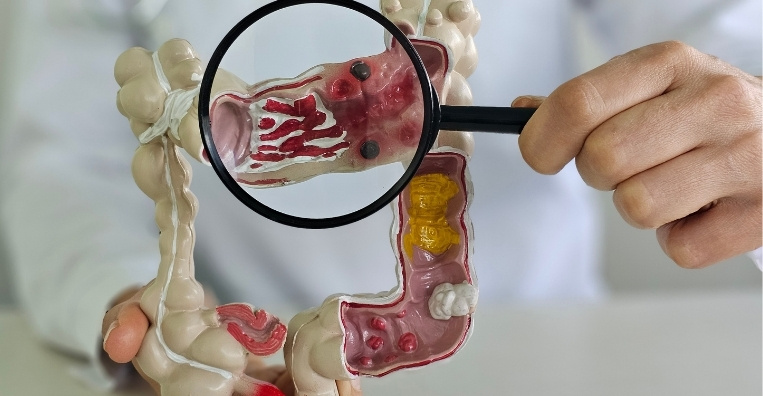
During a colonoscopy, a thin, flexible tube with a camera is passed through the rectum to examine the colon. Polyps can often be removed during the procedure, and samples of suspicious tissue can be collected for examination. Colonoscopy may be recommended as the initial screening test for people at increased risk.

Who Should Be Screened

Adult age 45+ at average risk as part of routine screening

Family history of colorectal cancer or an advanced polyp

A personal history of colorectal cancer or certain types of polyps

Icon

Inflammatory bowel disease, including ulcerative colitis or Crohn’s disease involving the colon

Previous radiation treatment to the abdomen or pelvis

Your Screening Journey at Apollo Cancer Centres

  • Registration
  • Risk assessment and consultation
  • Fecal immunochemical test (FIT)
  • Specialist review
  • Colonoscopy (with or without biopsy) if recommended
  • Results and next steps
Your Screening Journey at Apollo Cancer Centres
Your Screening Journey at Apollo Cancer Centres Colorectal Cancer

Advantages of Colorectal Screening at ACC

Individualised Risk Assessment
Individualised Risk Assessment

Screening recommendations are based on age, personal and family history, symptoms and other risk factors.
Convenient Initial Screening

Convenient Initial Screening

For people at average risk, FIT offers a simple, non-invasive way to begin colorectal cancer screening.
Specialist Evaluation

Specialist Evaluation

Gastroenterologists, colorectal surgeons, oncologists, radiologists and pathologists work together when further evaluation is required.
Comprehensive Cancer Care

Comprehensive Cancer Care

If colorectal cancer is confirmed, patients have access to multidisciplinary treatment planning and personalised cancer care.
Coordinated Follow-up

Coordinated Follow-up

People with a positive FIT or an abnormal colonoscopy finding are guided towards appropriate investigation and care.
Colorectal Cancer: What You Need to Know
Colorectal
Frequently Asked Questions
01 What is the ColFit Colorectal Cancer Screening Program?
icon icon
ColFit is a risk-based screening program designed to detect colorectal cancer and precancerous polyps before symptoms develop. Depending on your risk, screening may involve FIT, colonoscopy or both.
02 Why is colorectal cancer screening important?
icon icon
Colorectal cancer often begins as a polyp and may develop without causing early symptoms. Screening can detect cancer at an earlier stage and allows certain polyps to be removed before they become cancerous.
03 At what age should screening begin?
icon icon
Adults at average risk are generally advised to begin colorectal cancer screening at 45 years of age. People with a family history, inherited condition, inflammatory bowel disease or another important risk factor may need to start earlier.
04 What is a FIT?
icon icon
The fecal immunochemical test is a stool-based test that looks for small amounts of human blood that may not be visible. It is non-invasive and can be completed using a stool sample collected at home.
05 Do I need to change my diet before a FIT?
icon icon
FIT does not usually require dietary restrictions. Follow the instructions provided with the test kit and inform your doctor about any medicines or active bleeding that could affect the result.
06 What does a positive FIT result mean?
icon icon
A positive FIT means that blood was detected in the stool. It does not necessarily mean that you have cancer, as bleeding can occur for several reasons. However, a colonoscopy is generally required to identify the cause.
07 What does a negative FIT result mean?
icon icon
A negative result means that blood was not detected in that particular sample. It does not completely rule out colorectal cancer or polyps. FIT should be repeated at the recommended interval, and persistent symptoms should still be evaluated.
08 Is FIT sufficient for people at increased risk?
icon icon
Not always. People with a strong family history, inherited cancer syndrome, inflammatory bowel disease, previous colorectal cancer or certain polyps may require colonoscopy and a more frequent surveillance schedule.
09 What is a colonoscopy?
icon icon
A colonoscopy allows a doctor to examine the inner lining of the colon and rectum using a flexible tube with a camera. Polyps can often be removed, and suspicious tissue can be biopsied during the same procedure.
10 How should I prepare for a colonoscopy?
icon icon
The colon must be thoroughly cleaned before the procedure. Preparation usually includes dietary changes, clear fluids and a prescribed bowel-cleansing medicine. The clinical team will provide specific instructions.
11 Is colonoscopy painful?
icon icon
Colonoscopy is commonly performed with sedation to minimise discomfort. Some people may experience temporary bloating, gas or mild abdominal cramps afterwards.
12 Are there any risks associated with colonoscopy?
icon icon
Colonoscopy is generally safe. Uncommon complications include bleeding, particularly after removal of a polyp, a reaction to sedation or a tear in the colon wall. The doctor will explain the benefits and risks before the procedure.
13 I have bowel symptoms. Should I undergo screening?
icon icon
Screening is intended for people without symptoms. Blood in the stool, rectal bleeding, persistent changes in bowel habits, unexplained weight loss, abdominal pain or iron-deficiency anaemia should be evaluated promptly through a diagnostic pathway.
14 Can colorectal cancer occur before the age of 45?
icon icon
Yes. Although the risk increases with age, colorectal cancer can occur in younger adults. Persistent symptoms should not be dismissed because of age, and people at increased risk may need earlier screening.
15 Can colorectal cancer be prevented?
icon icon
Not every colorectal cancer can be prevented. However, regular screening can reduce risk by identifying and removing precancerous polyps. Maintaining a healthy weight, exercising regularly, avoiding tobacco, limiting alcohol and eating a balanced diet rich in whole grains, fruits and vegetables may also help lower risk.